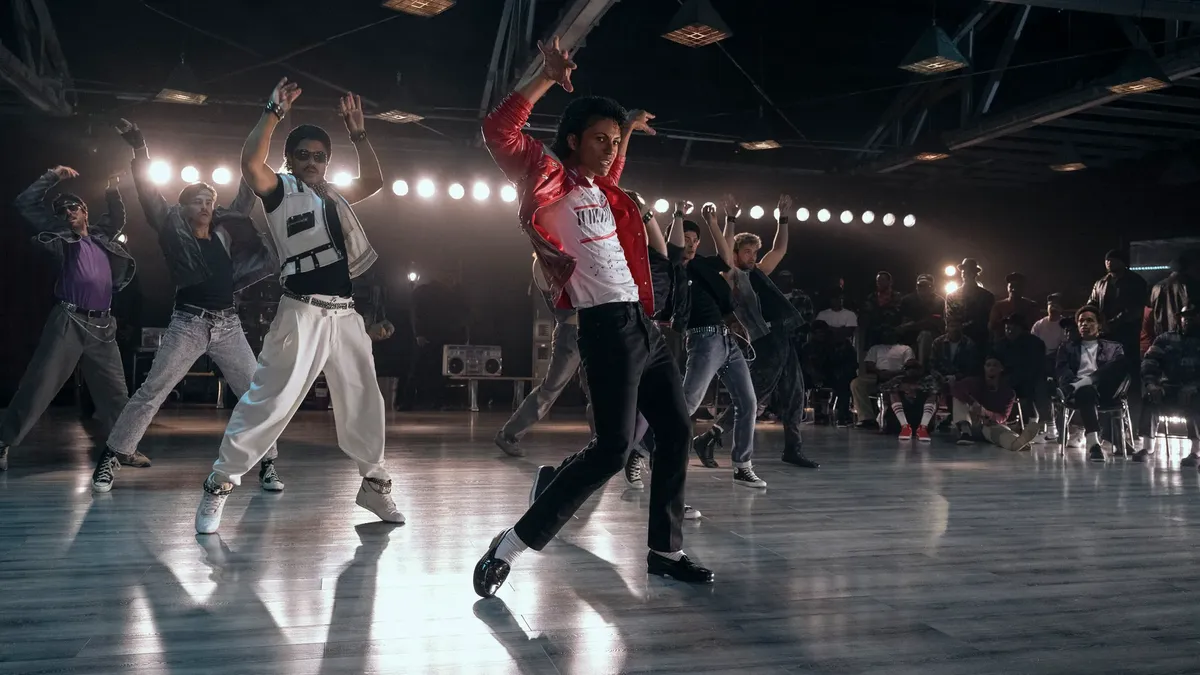
Michael presents itself as a behind-the-scenes account of how Michael Jackson became a global pop phenomenon, but the film appears less interested in psychological complexity than in career management, image construction, and spectacle. Directed by Antoine Fuqua and starring Jaafar Jackson as his uncle, the movie arrives as one of the year’s most anticipated biopics.
The central criticism is not that the film ignores Jackson’s talent, but that it narrows his life into a safer, estate-approved narrative. According to People, earlier versions reportedly included material connected to the 1993 allegations and a Neverland police raid, but the theatrical cut ends in 1988 and omits those allegations entirely. The same report says director Antoine Fuqua and producer Graham King received additional compensation after reshoots tied to those removals.
As a result, Michael sounds less like a searching biography than a polished corporate portrait: strong on costumes, hits, choreography, and the machinery of fame, but evasive about the personal controversies that shaped Jackson’s public legacy. That may make the film accessible to fans who want the music and the mythology, yet it also limits its value as a serious biopic. A life as influential and contested as Michael Jackson’s requires more than backstage maneuvers and iconic poses; without the difficult parts, the picture risks becoming not a portrait of the man, but an extension of the brand.