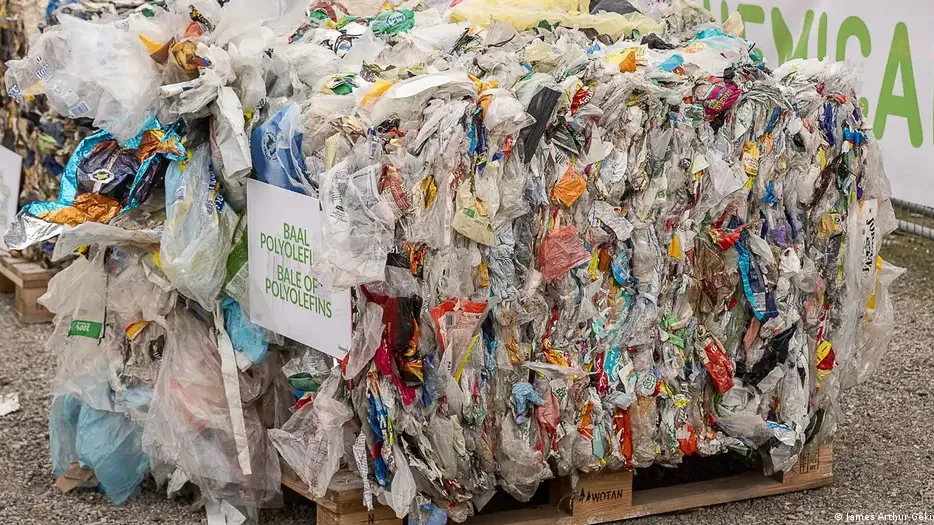
In a brightly-lit room in Houston, Texas, environmental activist Malachi Key is searching through a pile of trash. He picks up a used chicken salad box, which like the other waste in the heap is being sent off for recycling, and slips a tracking device inside.
In 2022, the city introduced a program that promised to give up to 90% all plastics, even those that are hard to recycle, a new lease on life. It's a significant claim, given that the US average is less than 10%.
But Key said the scheme, which is a partnership with plastic industry leaders like ExxonMobil, LyondellBasell and Cyclyx International, is "too good to be true." Hence the tracking.
This is not the first time he and his fellow activists with environment nonprofit Air Alliance Houston have played sleuth. In the past year and a half, they've counted 14 times when their plastic trash was in fact moved to a third-party storage site and simply left there.
"The accumulated plastic was not actually being recycled. Not in any way, shape or form in the way that the City of Houston had been saying."Jen Hadayia, executive director of Air Alliance Houston
Plastic production to double by 2050
The city's promised new program is an advanced process that can tackle unrecyclable single-use plastics, such as bread wrappers, juice pouches or yoghurt pots. Attracting millions of investment dollars from across the United States and Europe, the emerging industry says by using heat, enzymes or solvents, it can break stubborn plastics into smaller chemical compounds.
These are then turned back into their original chemical building blocks for use in making recycled plastics said to be indistinguishable from the virgin stuff — effectively meaning the material could be remade over and over again. Such is its apparent promise that the American Chemistry Council has heralded advanced recycling as "a breakthrough for reclaiming used plastics" which can "help lead to a circular economy."